|
More reviews coming very soon...
One of the truly groundbreaking groups of the Sixties, the Byrds pioneered folk rock, psychedelic rock, raga rock, jazz rock, country rock, and electronic space-age rock. Roger McGuinn, Chris Hillman, David Crosby, Gene Clark, and Michael Clarke, the original Byrds lineup, made a formidable team; they were a musically accomplished, visually stunning band. Over the course of just two years, the Byrds released four remarkable, revolutionary albums: Mr. Tambourine Man (1965), Turn! Turn! Turn! (1965), Fifth Dimension (1966), Younger Than Yesterday (1967). And then in January, 1968, The Notorious Byrd Brothers, one of the most sublime albums of the Sixties, arrived. L.A. musician and writer Ric Menck contends that the band was at the top of its game. In his glowing tribute to the group's fifth album, The Notorious Byrd Brothers (New York: Continuum Books, 2007), Menck confesses that he is "deeply in love" with the record (p. 143). "The Notorious Byrd Brothers," he asserts, affects him "profoundly…Whenever I play the album it never fails to intrigue me" (pp. 142-143).
Menck carefully dissects The Notorious Byrd Brothers, both musically and lyrically, providing perceptive commentary on each of the album's eleven songs. For example, "Artificial Energy" relates "the horrors of amphetamine use" (p. 85). "Wasn't Born to Follow," wisely used in the 1969 Peter Fonda-Dennis Hopper-Terry Southern film classic, Easy Rider, proposes "the idea of leaving the real world behind in order to find a more perfect place, perhaps even heading back into the wilderness" (p. 104). And "Draft Morning" condemns America's bloody involvement in Vietnam.
Menck also provides a thorough examination of the outtakes, unfinished pieces, and extra songs recorded during The Notorious Byrd Brothers sessions (July-December, 1967) which did not appear on the original album, including David Crosby's brilliant but provocative "Triad," which concerned a ménage a trois. After the other Byrds rejected this controversial tune, the Jefferson Airplane, much to Crosby's gratification, recorded and released it on their Crown of Creation album. "Triad" also appeared, at last, on the expanded reissue of The Notorious Byrd Brothers in 1997.
Menck highlights the invaluable contributions of other musicians who performed on the album. Struggling to play the Byrds' new, more abstract music, weary of the rock and roll lifestyle, and discouraged by the bitter, continual infighting between Crosby and the McGuinn-Hillman camp, drummer Michael Clarke left the group before the record's completion. To fill Clarke's shoes, Columbia summoned veteran talents Jim Gordon and Hal Blaine, "two of the finest session drummers in Los Angeles" (p. 85). Studio musician Red Rhodes also played on several tracks, adding "glittering emeralds of sound…with his pedal steel guitar" (p. 103). And popular L.A. session man Clarence White, who would join the Byrds as an official member in the summer of 1968, played some "amazing country style guitar" (p. 81). Finally, Menck extols the work of Gary Usher, the album's inspired, innovative producer.
A knowledgeable and insightful Byrds scholar, Menck does not shy away from harsh assessments. Analyzing Clarke's "ramshackle" drumming , for instance, he observes that it "sounds pretty sloppy on most of the band's recordings" (p. 122). However, Menck adds that Clarke, a dead ringer for the Rolling Stones' stylish Brian Jones, was essential to the Byrds' success. Despite his "technical shortcomings," Clarke "was the man for the job…his playing had character and his looks and personality perfectly suited the band…the family broke apart when he left, and things were never the same again after that" (pp. 122-123). Menck also critiques the Byrds' sub par performance at the Monterey Pop Festival in June, 1967, calling it "hyperkinetic, like an amphetamine-fueled garage band" (p. 135). And when it comes to discussing the Byrds' drug intake, Menck is brutally frank. "They all smoked copious amounts of marijuana," he relates, "ingested LSD like candy and eventually added amphetamine and cocaine to the mix" (pp. 118-119). Yet in the final analysis, the Byrds were extremely intelligent artists who "always conveyed an intellectual message in their material and never felt the need to pander to their audience" (p. 111). Roger McGuinn, in particular, "introduced complex spiritual and philosophical concepts" to rock on such songs as "5D" and "Change Is Now" (p. 112).
One of the most important themes on The Notorious Byrd Brothers is "the idea of youthful innocence" and the yearning for a simpler time and place, long lost (p. 120). Little wonder. While creating their landmark album, the Byrds literally shattered. Gene Clark, who initially left the group in 1966 to pursue a solo career, made a handful of appearances at the Notorious sessions. His input, though, was minimal. David Crosby's personal and artistic disagreements with Roger McGuinn and Chris Hillman exploded in an ugly confrontation in late August. Two months later, Crosby was fired by his band mates. In his evaluation of Crosby's dismissal, Menck clearly sympathizes with the McGuinn-Hillman faction. He portrays Crosby as a gifted musician, but a "relentless," "complaining," "outwardly vocal" personality (pp. 49, 78, 97). "Unlike the others, he just wasn't a team player," Menck writes (p. 78). Subsequently, McGuinn, Hillman, and producer Gary Usher erased Crosby's vocals from several of the tracks he had recorded for the album. And within two months of Crosby's October sacking, an exhausted Michael Clarke quit the band. When the record finally appeared in January, 1968, only two of the original Byrds, McGuinn and Hillman, remained. The Notorious Byrd Brothers, Menck concludes, "is definitely the original lineup's finest and most cohesive…statement. Despite the traumatic conditions under which it was constructed, the album evolved into a seamless piece of artistic invention…It's too bad all of them weren't still around to bask in the glow of such a monumental artistic achievement" (p. 83). From turmoil came brilliance.
Informative, opinionated, well researched, and skillfully written, Menck's little volume is a worthy addition to Continuum Books' 33 1/3 Series on preeminent rock albums. Buy it now.
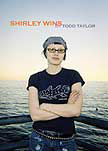 "Shirley Wins"
By Todd Taylor A grandmother who is raising her granddaughter by herself, comes to a realization that something is missing from her life. Sounds like a typical coming of age story? Not quite, since the joy of a new discovery does not come from some old dude walking in the front door. That would be the new Diane Keaton movie. This is about an idea, a crazy and sometimes even dangerous idea. But Shirley's idea won't loosen its grip, even when it almost kills her in the process. Luckily, she has a cool as ice assistant-Rachel, her punk rock granddaughter. As a team they strive to achieve the impossible-and shock many innocent bystanders in the process. Shirley Wins is the rare page turner that I couldn't put down. Plus, it's from an author that's not dead. So unlike the rest of the authors stacked in my basement library, there may be a sequel. Or at least another captivating read like Shirley Wins.
|


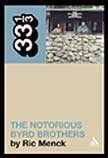 "The Byrds' The Notorious Byrd Brothers" (33-1/3 Series)